Showing posts with label success. Show all posts

Tuesday, November 13, 2018

"I AM VERY FRIENDLY"

Vocational Rehabilitation is a federal-state program that helps people with differences/disabilities overcome barriers to employment, gain work skills, find jobs, and build careers.

Our local Voc Rehab office recently started a program called “Linking Learning to Careers,” which works with differently abled high schoolers to develop job skills and connect school work with work-work.

When G was filling out his application, he had to answer some questions about his skills and future plans. 

One question was “What strengths do you bring to school, work, and your future career?”  

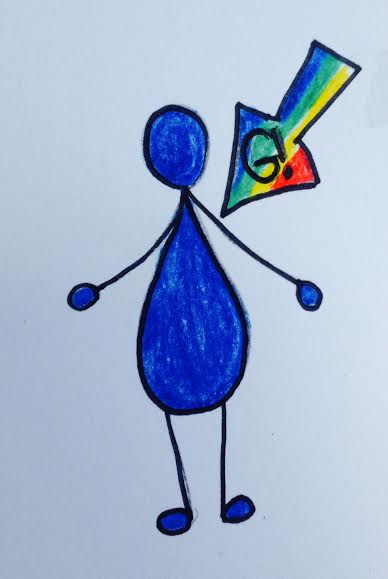
G wrote, “I am very friendly.” 


Figure I — “I am very friendly.”

My heart sank a little. “Honey, that’s not…” — I looked at his little [huge baby man] face — “Never mind.” 

I almost began to spiral on that one, but I didn’t say anything. I want him to feel confident and value his own strengths, even if they might be seen as somewhat irrelevant by his mom — or completely useless by a future employer.

G and I had been participating in fundraising efforts for a school trip he wants to go on; and I’d been working on a calendar raffle handout that the kids could use to sell tickets. The day after G completed the Linking Learning to Careers application, I finished the calendar handout and students began to sell raffle tickets. 

That very day, G went out and sold all of his raffle tickets within an hour.

In the end, he exponentially outsold every other student in the group.


Figure II — Friendliness + Initiative = Success

Here’s how he explained it to me: “Mom, I’m on the spectrum, so I don’t know when to stop. I just keep asking!”

A few days later, G and the other runners received their participation awards at the end-of-season track banquet. The coach spoke a bit about each student. When it came to G, he said, “When we go to meets, [G] knows more people than the entire team combined.” 

There you go, I thought, there are those skills of friendliness he brings to school, work, and his future career…

G really, really wanted to go on that trip — and he made it happen. Heck, he wanted friends — and now he is friendly with hundreds of people. 

Sure, there are things I wish he would make an effort with that he doesn’t yet grasp the importance of, but when it really came down to it, G’s motivation and initiative helped him use his skill of friendliness to be truly successful. 

I hope that will continue to be true as he builds independence.

Our children (and selves!) with differences have amazing, sometimes-hidden or non-obvious gifts. These gifts become operationalizable — and that’s just sociologist-talk for making dreams come true — when fueled by real needs and wants.

This experience showed me we can all achieve success if both the success itself and the means of achieving it are meaningful to us and allow us to implement our unique skills. 

That might sound kind of basic, but it was a revelation to me. 

And it’s changed the questions I’m asking G as he moves out into the world. 

Instead of trying to ask questions that instill a “realistic” worldview and attitude — such as “Do you realize people how many hours you would have to work to buy those Magic the Gathering cards?” —  I’m wondering:

What are you passionate about? 
What do you truly want? 
What do you need for health and happiness? 
What unique skills do you bring to the table? 
AND
How can you connect all of these to live your best life? 

But honestly? I think G was way ahead of me on this. I was basing my approach on fear; while he bases his on hope. 

Love, 
Full Spectrum Mama

 Welcome to Voices of Special Needs Blog Hop -- a monthly gathering of posts from special needs bloggers hosted by The Sensory Spectrum and The Mommy Evolution. Click on the links below to read stories from other bloggers about having a special needs kiddo -- from Sensory Processing Disorder to ADHD, from Autism to Dyslexia! Want to join in on next month's Voices of Special Needs Hop? Click here!


Tuesday, February 13, 2018

GAMING FOR PARENTS


Let's play a game, and in that game the rule is, everything I say is annoying and wrong. 

This game is called…The Teenager Game. 

Here’s a brief round from just the other morning:

FSAM* [cheerful and encouraging]: G,  if you have to stay the whole period for your test but are done,  why not use that time as a chance to bring up your grades? You know, work longer on the test after giving your brain a little break. Or ask your teacher what other work you can do! 

G [ultra-sullen/condescending]:…Do you have to talk to me? 

FSAM [caring, thoughtful, respectful]: Z, The writing program ends in April, right? How is your writing going?  

Z [side eye]: We will send it in in April. 

FSAM [confused and/or correct]: Well…doesn’t that mean it’s over?

Z: [shrug].

The Teenager Game is pretty exhausting. Like any parent with teens, I often wonder how to get through to them. Almost everything I say to them is, quite typically, met with disgust and dismissal. 

By the way, how did they get this “grownup,” anyway? 

When I was pregnant and had begun the long process of worry that is a big part of parenthood, an experienced mother of three grown boys told me something that really helped me through my first few years as a parent: “The odds are with them.” 

It was such a simple phrase, but it truly carried me through some rough moments. One kid would get croup and I’d be up at 3am holding him or her, listening to what sounded like a death rattle in a steamy bathroom and I’d be scared out of my wits. Then  I’d think, “Jill told me the odds are with them! How many babies have croup right now? Lots! S/he’s gonna live!” With each wee bit of independence or separation, too, I would start to spiral. Then I would remember: “The odds are with them!” It was such a comfort. 

But there’s a catch now. The things is, with autistic kids — my son, G, is on the spectrum — the odds aren't with them. Without getting into the precise (very daunting) statistics, people on the spectrum are significantly less likely to achieve all sorts of things that typical people mostly take for granted, like independence, employment, academic accomplishments, romantic relationships, parenthood, health. And kids with behavioral and emotional issues, like those my daughter has struggled with due to her attachment disorder, do so much better in the long term when those issues are addressed in their younger years. 

So in this “game” of teenage disaffection, the stakes feel higher in the Full Spectrum household, as they would in any household with differences and disabilities. I have to get through to my teens, since the things most people take for granted will eventually happen for their kids - independence, mental health - are not a given. I have to tread a fine line between accepting that my children are beastly teens, while remaining alert for any signs of impending disastrophes. At the same time, I have to not have a nervous breakdown?! 

So how do we improve the odds? Ideally, while not having nervous breakdowns, not breaking the kids, without the kids breaking themselves, and while presuming competence for all, we will also be able to encourage them and help them flourish as the unique, irreplaceable, precious beings they are. 

And this isn't a zero-sum game. The more our loved ones with differences are uplifted, the more they succeed, the more progress, acceptance, and awareness for all, right? After all, that’s the whole point of this here blog. 

Stay tuned/bear with me as I approach this transition phase, along with my Meeting Friend, and a few other loving yet terrified parents of teens. I will share input from parents and guardians and individuals who have been there as well. 


Love,
Full Spectrum Mama


* Full Spectrum ANNOYING Mama


P.S. FSM has received some good press and stuff lately, and readership continues to climb (at 175,000+ as I write!). I was interviewed, about, among other things, activism, advocacy, and parenting a neurodiverse child as a neurodiverse parent here, at this great site that recommends asking real live autistic people about how they feel and what they want in their lives. Also, I am so honored and excited to have been named a "Top Autism Blog for 2018" - Oooh, I just have to share: "Full Spectrum Mama writes in a refreshingly honest style with beautiful rainbow illustrations that accompany her posts. It’s one of the most unique autism blogs on our list."

Action Behavior Centers


Welcome to Voices of Special Needs Blog Hop -- a monthly gathering of posts from special needs bloggers hosted by The Sensory Spectrum and The Jenny Evolution. Click on the links below to read stories from other bloggers about having a special needs kiddo -- from Sensory Processing Disorder to ADHD, from Autism to Dyslexia! Want to join in on next month's Voices of Special Needs Hop? Click here!


Wednesday, December 21, 2016

HOPE


Dear Persons,

On this shortest day of the year, the Full Spectrum family wishes you hope.

Over the last five years, this blog has grown from a solitary voice in the dark looking for community and shared stories to a force for advocacy and awareness over 100,000 readers strong.

On this solstice, I am grateful for you, dear readers. Together, we are shedding light on the worth of all people. We are exploring the ways in which our challenges can be met with justice and grace, and ensuring that the unique gifts of every individual can be nurtured and celebrated.

Much love,
Full Spectrum Mama

Tuesday, August 9, 2016

HIGH SCHOOL PRAYERS


This post is a sequel to MIDDLE SCHOOL PRAYERS. I revisited that post while preparing this one, and found that it’s pretty much 100% still relevant.

Similarly, I would use the same disclaimer: basically: please feel free to substitute institutions (workplace? family? elementary school?), gender (I’ve occasionally written “he” because the child in question is my son, but I mean these prayers to be INCLUSIVE), labels, and language (God? Great Spirit? Goddess? People?) that feel right to you if you feel moved to share these prayers.


Dear Universe,

Thank you for my child’s safe passage through Middle School with our sanity relatively intact. If it’s not too greedy, I would like to add on to my Middle School Prayers list. Following, please find a number of additional Prayers more specific to High School:


1. May my child not get lost in a larger setting. 


2. May my child not get anybody pregnant (for biological                 girls, please substitute “get pregnant”).


3. May I dole out the RIGHT amount of freedom to                     my child.


4. May my child always know deep down how much he                   (she) is loved.


Pretty simple requests -- and all probably shared by most parents and guardians of High Schoolers-to-be, right?

Yet, as a parent of a child on the autism spectrum with sensory processing differences (SPD), each Prayer has multiple layers for my family, as they must for so many families with significant differences. Please, dear readers and dear Universe, allow me to elaborate –

1. About the not-getting-lost bit. My child is one of the deepest, smartest people I know. He can read ANYTHING. But write? Not so much. Focus? Similar, unless we are discussing a special interest. Dyspraxia, SPD, and a general lack of executive function make mainstream school environments and requirements highly challenging for my child.

Add in a major life transition, a much larger student body, and MUCH less in-class paraprofessional support, and we have what feels to me like a perfect recipe for my child getting lost, falling between the cracks, getting shunted through...

During the High School Transition Meeting, when his case manager kept saying, “We see that all the time” to concerns raised by his Middle School Team, it did feel reassuring, but it also felt like G was being stereotyped. Like any child, G is an individual and I hope for him to continue to be seen as one in High School. I’m not sure yet what “success” will look like for my G – will he reach his academic potential in this setting? will he want and/or be able to go to college? – but I want him to have the chance to reach for it. I want him to know he is known.

Dear Universe, may our children find their own healthy, rewarding ways of learning, growing, and interacting in High School. May they be treated fairly, and may they be accepted and cared about for who they truly are by staff, teachers, and their fellow students.


2. Re: pregnancy.You know how all teenagers have lots and lots of hormones and very, very little sense? Well, imagine all the hormones with way less sense than that, even. Kind of makes ya nervous, right?

Then, dear Universe, we are on the same page. May our children have the opportunity to continue being children just a while longer, please.


3. Freedom. The vast majority of parents fully expect their children to be independent at some point. A small minority know with certainty that their child will never live on his or her own. We are in-between, and it’s a tough place to be. I want to do right by my child, who is still in the very beginning stages of developing life skills like judgment, executive function, common sense, perseverance. I want to respect him – and he’s very worthy of that respect, with all his wonderfulness and brilliance and perfection (said his mom). But I also need to make sure he doesn’t make irredeemable mistakes while these life skills are still emerging. And I need to be vigilant for the long term should some of those skills never emerge.

The transition into High School feels like the first time I will really, finally need to begin to actually figure out how our family will tackle these weighty issues.

Will G ever drive? I’m not sure. Should he? Probably not, at least any time soon! (I didn’t drive until my late thirties...) Will he desperately want to? Probably.

Will G ever be able to live on his own? Probably not without some help, whether from a case manager or partner. But I am not sure! He’s surprised me before with huge developmental and personal growth. I know he envisions an independent life for himself, but I also know he has no idea what that would entail. I’ll need to begin looking into guardianship options fairly soon if it seems like he won’t live on his own.

There are significant financial resources for some people with some disabilities. Would G feel insulted by the suggestion that he cannot create his own success on neurotypical world terms or glad to be able to focus on his interests? The huge part of me that has enormous respect for G dreads even raising this matter with him. Yet...when he tells me things like “there’s no reason to cut toenails” or I watch him approximate his idea of how a chore really should be done – and he has many original ideas about regular stuff like this every day – I cannot imagine him keeping a job or household. If he doesn’t “get it,” he’s not interested – so I imagine the key in the long term will be for him to be invested in daily life in such a way that such things as cutting toenails (and other hygiene matters), paying bills, putting in time earning a living, etc. will make sense and feel compelling to him on a level where he can achieve these basic skills. Here’s hoping High School will instill some good habits in this regard.

And then there’s the question of what will happen to him after I am gone if he can’t live on his own post-High School and into adulthood, which is the deepest, most constant fear of all of us with children (including grown children) who can’t necessarily navigate the neurotypical world in typical ways.

Whew – I am glad High school is four years long!

Dear Universe, may my child always have a safe home – where he learns, where he lives - where he is free to be himself.


4. On Love: Recently, my behavior generally gets interpreted by my teen in one of two ways: I am either invasive and embarrassing (smothering) or I’m uncaring and have hurt his feelings (abandonment). I can’t win. This is developmentally appropriate (see above hormones, lack of sense, etc.), but the combination of extra social and academic challenges he will experience make his feeling consistently loved even more of a priority. This, even as his interpretations and perspective are inflected by different ways of interpreting/perceiving my intentions, feelings, and actions - and those of others around him. It remains to be seen how this dynamic will play out in High School.

Dear Universe, despite his developmentally-appropriate sour attitude and unique, quirky ways of processing interactions, may my child know he is loved – enormously – exactly as he is as he makes his way into and through High School.


Dear Universe, for all the children privileged to be going back to school, and for ALL children, I wish these good things and more.  


Love,
Full Spectrum Mama


Welcome to the Sensory Blog Hop — a monthly gathering of posts from sensory bloggers hosted by The Sensory Spectrum and The Jenny Evolution. Click on the links below to read stories from other bloggers about what it’s like to have Sensory Processing Disorder and to raise a sensory kiddo!


Monday, February 29, 2016

FOURTH ANNIVERSARY LISTS II: ATTACHMENT DISORDERS


There are not as many advocates for attachment disorder awareness as there are for the other areas of advocacy I explore, such as adoption, autism, and sensory processing differences. For this reason, I regularly revisit this theme for this one-topic anniversary post.

Over the years, I’ve tended in this blog to focus more on autism awareness and advocacy because our experiences with attachment disorder feel somehow more private, more inflicted. Attachment disorders cause children (and adults) to act in ways that are often unhealthy, even anti-social, all because of negative childhood or early life situations that did not allow them to form healthy attachments, or prematurely severed such connections.  Unlike autism and other neurological differences, typically inborn states that do not fundamentally need to be “cured” (I write a great deal on this elsewhere), attachment disorders are a sometimes incapacitating psychological condition that can benefit from intensive treatment, primarily through therapeutic parenting or work with an experienced therapist.

I share our Full Spectrum family struggles with my daughter Z’s attachment disorder for two reasons. First, because families all or partly formed by adoption or fostering may be facing this condition unawares, and may be desperate for help; and, second, because one of the central reasons we are a Full spectrum is because my children are so divergent – and this is partly because of Z’s attachment disorder. 

I will offer a little background. As you read about my daughter, please do so bearing in mind that her condition was/is not her “fault” – and is therefore nothing to be ashamed of...

When Z came home she was furious - with good reason. She was ultra-demanding, starving, relentless.  As she got older she began to steal, hoard, and lie compulsively. She became controlling - and a master manipulator. Constant power struggles with a tiny person were exhausting for the whole family (including Z!). Her tantrums continued to disrupt almost any environment she found herself in, well into her ninth year.

Her acting out was most overt with me, her mother, because she trusted me the most -- and thus needed to constantly test me. Highly challenging attachment-disordered behaviors may well be reserved for the home environment, or particular individuals, such as a parent or teacher.

While she was small of stature, adorable, and enormously charming – traits which her therapist pointed out were actually a disadvantage to healing, because they masked the ugliness of her behavior – Z’s behavior much of the time was destructive in subtle and not-so-subtle ways.

If you have a child who is exhibiting such behaviors, GET HELP. Trust me, you’re going to need to learn to do things very differently than you might expect! For example, many families with children who were adopted attempt to make up for any pain caused by the loss and turmoil of the adoption process by being indulgent and extra-doting with their children. Conceding to a child’s every demand, even with loving intent, can be a recipe for disaster with a child who has an attachment disorder. Look for a therapist with expertise in this area, and read everything you can find. I’ve talked about some specific strategies here and here and here, as well as below.

Children (and adults) with attachment disorders desperately need to feel SAFE. To that end, they try to control the things and people around them.  It might sound counterintuitive, but – in a very real way – such attachment disordered behaviors emerge in a painful search for safe, strong attachments. Unfortunately, attachment disordered actions tend to result in forming primarily conflict- and need-based relationships, rather than healthy, loving ones.

TMI? Successful therapeutic parenting in one sentence? Yes:

Create an environment with
CLEAR and
CONSISTENT
RULES and
BOUNDARIES
          so that your child can feel safe
-- and so can channel his or her energy into healing and growth.


As unknown as they are, attachment disorders are very real. They can be debilitating for families; they are also sometimes almost completely curable. In our family, many years of consistent therapeutic parenting, at times under the care of a therapist who specializes in attachment disorders, have resulted in a child who is light years healthier and happier than she would have been without this specific mode of therapy.

As Z heals, her true character – brave, loyal, funny, quick, loving - begins to emerge, unhindered by a condition imposed upon her by chance through her birth circumstances. She’s strong, in her own words, “Tiny on the outside but HUGE on the inside!” She’s a wonderfully practical girl, sometimes a bit more blunt than she was raised to be...but these things are characterological, part of her disposition, not just a result of trauma. In fact, we see a myriad of traits, such as being an astute judge of character, that merge positive aspects of her natural self with lessons learned from living through an attachment disorder. Perhaps best of all, while she’s never going to be the world’s most sentimental person, she’s cuddly in a way I could not have dreamed of even a few years ago.  

She feels safe enough to relax in my arms...versus her previous inclination to demand that I carry her around at all times. The wonderfulness of this shift cannot be overestimated.

Children are terrifically resilient and, like plants, they just want to GROW. They just need the right conditions to do so in the healthiest way possible for their unique needs.

Love,
Full Spectrum Mama