Showing posts with label accommodations. Show all posts

Tuesday, June 12, 2018

HAVING IT BOTH WAYS

Dear Persons,

I had an argument with myself yesterday.

I was thinking about this whole process I'm beginning for setting up G's future.

How I want him to have all the support he needs. And all the respect.

If you’re reading this, you probably have your reasons for doing so — and you probably understand some of the paradoxes of living with difference.

But yesterday my critical self — representing both a certain logic AND people who just don’t get it — accused me of trying to have it both ways.

I want G to have a safety net and scaffolding that will help him stay healthy and on point with his studies and/or work. That means federal, state, local, community, and family resources. And it means I will advocate and fight for these resources…

I will do so even as I believe in his capacities to thrive, succeed on his own terms, and even excel on a  wider scale — and will also advocate and fight for his equality on every level. 

He’s autistic and he’s brilliant. Partly, he’s brilliant because he’s autistic. Yes, without pressure he might never clean his room or his body again; yes, I hope someday that won’t be the case. But do you need to know anything — anything at all —  about birds, Pokemon, ‘90s punk funk, or Magic the Gathering? 

He doesn’t self-regulate vis-a-vis screen, sleep, food, etc. and he doesn’t self-regulate being friendly, loving, corny, and generous. For the foreseeable future, he will continue to need sensitive and wise supervision in a lot of the basics. But do you need a hug, a smile, a laugh, someone to look at you with eyes and heart utterly devoid of judgment? 

Think of all the ways people without extraordinary differences are helped out by other individuals and institutions, from federal poverty programs to local business initiatives, from recovery groups to the uptick in adult children living at home. We all need help! 

But being different is complicated. The types of public and private assistance that are commonly available are often predicated on being unable to do things that people “should” be able to do. Well, I’d like to note (not for the first or last time) that our G — like so many of his fellow “non-typical” people — can do a lot of things that not just anyone could.

Because society is the way it is (have you heard of the social model of disability?), he will need and deserve plenty of support and scaffolding if we are going to find out what he is truly capable of. At the same time, he will need and deserve a lot of respect and encouragement. All of these needs are valid and worthy because he's a disabled/differently-abled person, a twice-exceptional individual…a complex, complete human being.
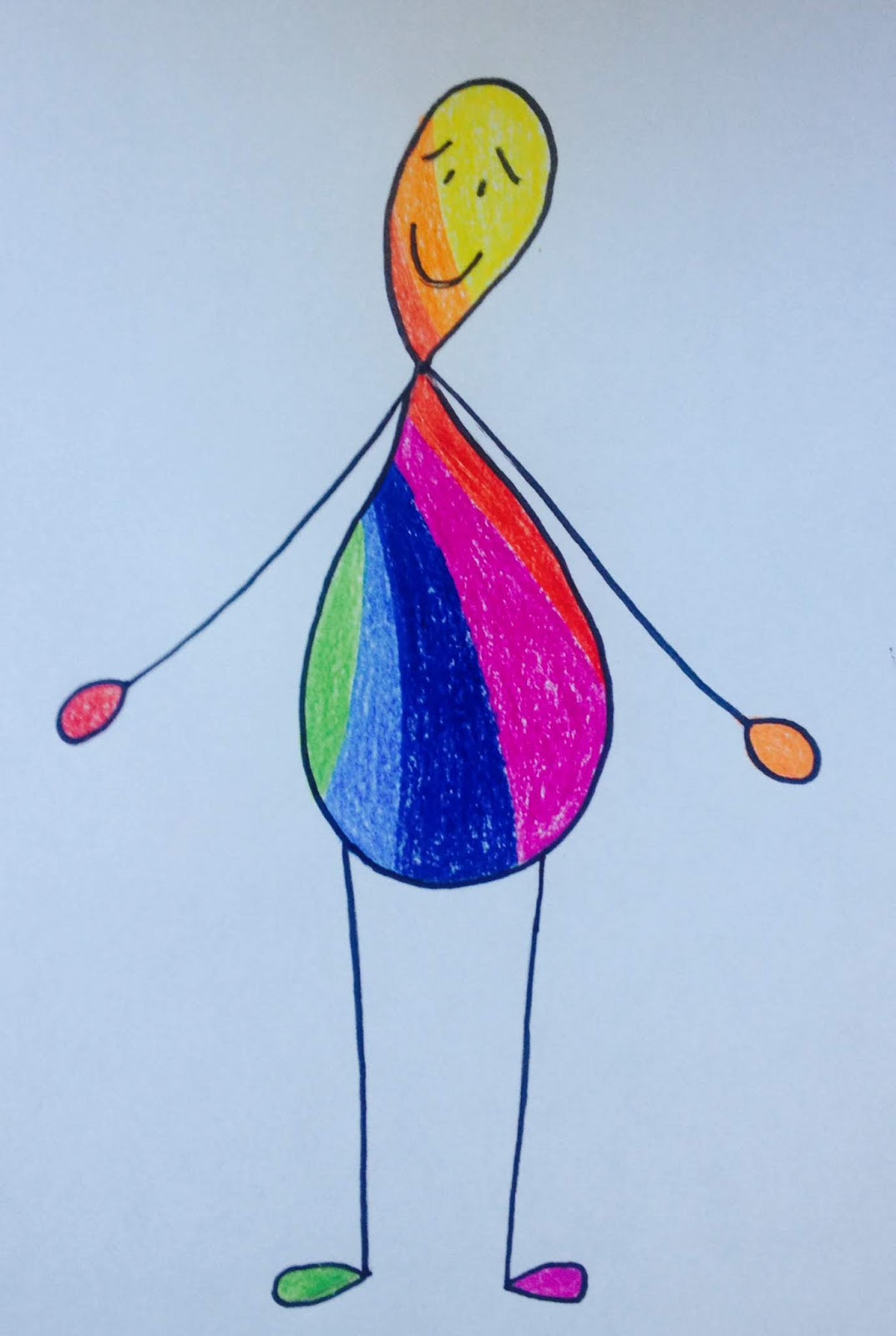

Figure I - Valued Contributing Member of Society 


Figure II - Person Whose Needs are Valid and Worthy 


My hope is that G can be sustained by his environment in such a way that he can use his unique skills to become a valued contributing member of society. If that’s having it both ways, so be it.

Love,
Full Spectrum Mama


Welco
me to Voices of Special Needs Blog Hop -- a monthly gathering of posts from special needs bloggers hosted by The Sensory Spectrum and The Jenny Evolution. Click on the links below to read stories from other bloggers about having a special needs kiddo -- from Sensory Processing Disorder to ADHD, from Autism to Dyslexia! Want to join in on next month's Voices of Special Needs Hop? Click here!


Thursday, January 21, 2016

FOURTH ANNIVERSARY LISTS I: ADVOCACY


Every year, this time of year, I get to indulge in a series of posts that use my most beloved mode of thinking and organizing: LISTS.  The first in the series has always been on ADVOCACY, a subject central to most everything I believe, ponder, and do, as a mother and as a writer.

I’ll be heading into both three-year IEP evaluation meetings and high school transition meetings in a few weeks. Considering the week I have just had, where I
1. noticed on page 27 of a 40 page IEP informational packet that G’s services were being cut from 24 hours per week to 11 for this fall when he starts high school;
2. noticed that G was once again failing several classes and had to engage intensively with him and his teachers and paraprofessionals and case manager* to get him back on track, mostly around executive function matters; and
3. travelled 45 minutes to an away basketball game to watch G play, having attempted a four-tiered system to help him remember his gear (for the record: written list, email, lecture at breakfast, and quiz in car) only to find that he’d forgotten his shorts.**
            ...this was a great time for me to review my advocacy lists and get prepared for what’s to come! As my Meeting Friend can attest, this sort of schedule of minor disastrophes is all too typical for we atypicals, so any time can be a good time to sharpen our advocacy skills.

Here are my previous anniversary posts on advocacy, chock full of tips for success (and some choice “don’ts”) in delightful list form:

Links:

You can also use the “search” function at right to find more posts pertaining to this important subject.

Since I’ve been blogging awhile now, I’ve more and more had the privilege of being asked for advice and support from near and far around advocacy. It’s probably the thing I get the most queries and referrals about, and I am pretty sure that’s because we all get intimidated as well as confused by powerful, sometimes-inflexible, institutional systems that are larger and more complex than us, and full of people who have their own agendas, not to mention the need to become well-versed, quickly, in completely new subjects...All the while dealing as individuals and/or parents with navigating a world that is not always welcoming of difference.

I’ve come up with this handy-dandy three point list to summarize the key aspects of advocacy as I see them, after almost a decade of advocacy:
1. INSIST!
2. PERSIST!
3. EXIST!

...And now for a little elaboration:

1. By INSIST, I mean, to go with what you know is right, whether anti-bullying or pro-services and –adaptations(–accommodations), whether at school, at work, in the larger world...Oftentimes you might not even know what the law or rule or adaptation/accommodation or service or policy is...but you know in your heart that you or your child deserves better. Is your or your child’s neurology, sensory profile, or other difference significantly impacting or impacted by your/their school (or work, or...) experience? Then something needs to change. Part of this step is finding out what can be done – finding a way to make things better – and then INSISTING upon it.

2. By PERSIST, I mean: don’t give up.  Sometimes our efforts at advocacy are flat-out exhausting. Sometimes they don’t help us or our children but they help others down the road (laws, do I have examples of this). If possible, keep trying: sometimes it might just take one more call, or google search, or email to another parent or a friend to push things over the line to full or partial success. Yes, there are a lot of things working against progress (on both smaller and larger scales), but there are good guys out there, and rules and laws that are meant to support equality and fairness...we as individuals can make a difference in the creation of and changing of attitudes and laws, too, but it takes time. PERSIST, dear reader, and find these people and these policies (or be/create them!) and let’s level the playing field!

3. By EXIST, I mean: you are a person! Yes, you! Take care of yourself. I don’t do this. None of us do. But we should. Especially when the world needs MORE from us, and we feel we’ve Nothing left. Sleep. Good, nourishing food. Taking a break sometimes and just reading or going for a walk...Am I ringing a bell here?


Life can sometimes feel like a roller coaster, all the more so when you and/or your child has/have atypical learning styles and/or neurology and/or abilities. When I contacted G’s case manager* to review his grades from the depths of a reasonable yet debilitating funk, she responded on that subject and then, later, sent me this:
I forgot to write it in my last email but...I have been meaning to let you know how amazing [G] was during his Socratic Circle in English class with [teacher]. He related the poem 'Kindness' to his negative experiences in [pre-move, reason-we-moved, elementary] school with bullying and was able to speak to how it made him understand kindness more. He also said that because of this experience he has become a more compassionate person. I was so impressed and moved by his thoughtful input. He was serious and thoughtful. It was just wonderful!
...This email kind of made up for the other disastrophes that week, my point being: take joy/comfort/light where you can...you may need it! Seeking out and really listening to those who recognize/acknowledge/celebrate your or you loved ones’ real gifts are a part of self-care and feeding of the soul.

You know – roller coaster alert - I had mixed feelings when this (very kind and hard-working) case manager* subsequently told me that “[G] could be in an advanced language arts class if not for his issues with organization and writing.” I mean...what’s not happening for him at school that you are not helping him enough with these very issues (learning differences [a.k.a. disabilities – the language we choose is part of advocacy!]) to realize his potential??? Wait...It’s time to advocate...Ciao!

Next Anniversary List: FOURTH ANNIVERSARY LISTS II: ATTACHMENT DISORDERS.

Love,
Full Spectrum Mama


* Ok, “Case manager” makes my son sound like a “case.” Yuck. Note to self: another advocacy goal for when things slow down....??
**The fact that G is on the basketball team is a subject for at least seven or eight future posts, which I will likewise write when the proverbial things slow down...


Tuesday, January 12, 2016

BOUNDARIES


“F*cked up people will try to tell you otherwise, but boundaries have nothing to do with whether you love someone or not. They are not judgments, punishments, or betrayals. They are a purely peaceable thing: the basic principles you identify for yourself that define the behaviors that you will tolerate from others, as well as the responses you will have to those behaviors. Boundaries teach people how to treat you and they teach you how to respect yourself.”


Dear Persons,

Boundaries keep us healthy.

Boundaries can be any shape (including partially open), thick, thin, obvious, subtle, situational, universal, expressed, internal, pleasing and convenient for others– or not, ordinary, extraordinary, permanent, flexible, temporary,...Boundaries can and should be of any type that promotes our health and healthy relationships. Boundaries consider and encompass ourselves and others as PERSONS.


Figure I – Visual Rendering of a Full Spectrum of Boundaries

A lack of boundaries finds an interesting overlap between neurodiverse people, who, for a variety of reasons, may be unaware of the possibility/necessity of certain boundaries, and unhealthy-to-toxic families, where vulnerable members (such as children, or, sometimes [and by no means only], women) may be abused or exploited partially because of weak or nonexistent boundaries in the family dynamic.

People who desire full health can learn about healthy boundaries and enact them. This can be challenging, especially at first, because new routines and behaviors always are (hello, transitions!), but also because sometimes others may take boundaries as a personal offense, or as selfish, or a burden.

Refer those chumps to the above quote. .

Basic well-being in life also embodies healthy boundaries (eating habits, personal safety, fitness...). For people who are highly sensitive, people with sensory processing differences, and people on the autism spectrum, among others, healthy boundaries may further include a diverse range of choices, such as:

* Not shopping at big box stores (this may hold, too, for people who have boundaries around consumption, or around economic ethics regarding working conditions of employees and/or manufacturers);
* Limiting the number of steps in any set of instructions, whether at school, work, or home;
* Allowing fidgets, pressure devices, what-have-you to be integrated in the classroom or workplace;
* Limiting or specifying social interaction;
* Avoiding fluorescent lighting, certain smells, loud noise, crowds....
* Finding mutually satisfying means of communication;
* Choosing clothing, food, etc. that does not hurt, distress, or irritate us;
* Deciding the conditions under which we will choose to share our unique circumstances and needs...


We have the inherent right to deduce and determine what feels safe, healthy, and appropriate in our lives. We can and should ask those who value our mutual health and relationships or who are charged with our wellness, working conditions, and/or education (and/or the education and/or care of our children!), to honor those boundaries.

Incidentally, healthy boundaries also allow us to more abundantly exude and take in all the good stuff.


Figure II – 
Person with Healthy Boundaries Enjoying The Good Stuff


I never knew all this; that’s why I am sharing.

Love,
Full Spectrum Mama

[EDIT, 1/13: My dear online friend Kmarie  Audrey posted this deeply thoughtful and interesting post after reading the above: 
http://worldwecreate.blogspot.com/2016/01/boundaries-christianity-grace-and.html]


Welcome to the Sensory Blog Hop — a monthly gathering of posts from sensory bloggers hosted by The Sensory Spectrum and The Jenny Evolution. Click on the links below to read stories from other bloggers about what it’s like to have Sensory Processing Disorder and to raise a sensory kiddo!


Tuesday, March 10, 2015

BOOTY CRUMBS

This month, for the Sensory Blog Hop, I thought I’d keep it light. Well, at least as light as it is possible to be when certain things that other people barely notice can make you completely nuts. Those tiny crumbs of cheese or vegetable dust from eating any sort of snack food that has a tasty coating (my favorites are Pirate’s or Veggie Booty; this category also includes Smartfood, Cheetos, Cheez Doodles…) that get on my hands make me CRAZY.

Here are some similar things I am actively choosing NOT to write about, or even think about, beyond this paragraph: unidentified particles on bare feet (there’s a long-told story in my family of how I stepped into a small puddle of water in the kitchen once and screamed. Well…yeah. Right?); seeing Booty Crumbs on someone else’s hands (shudder). This latter is a particular issue as my son falls on the strongly not-noticing Booty Crumbs (or any schmutz, anywhere) end of the Spectrum.

I imagine – the operative word being imagine – that a “normal” response to Booty Crumbs would be to notice a mild dust on your digits and brush it off or calmly wait until you have a chance to wash your hands. As in, not be completely consumed by the awareness thereof?


                                                      Figure I – Booty Crumbs, Typical

That’s not an option for me. The surface of the skin is an information-rich field. When I have Booty Crumbs, I can feel them (whispery, tickly, dirty), smell them (cheesysour), see them (ew! Scandalous!), taste them (still in my mouth, but also from smelling), even hear them (that oily-dusty sound)…Consequently, if I have Booty Crumbs, I cannot stop thinking about said Booty Crumbs.


                                             Figure II – Booty Crumbs, Sensory Sensitive

Like anyone, I like to eat a nice snack of cheesy or vegetal goodness. The various Booty snack foods are a common part of our family snacking habits. Yet how can I function when there are Booty Crumbs? I cannot.

But! I have the answer! Being a bit slow on the uptake, largely because I am often overwhelmed by feelings and environment, it has taken me, ohhhh, 45 years to, first, realize why I felt so discombobulated every time I had a snack of this sort, and, then, to come up with a solution: “drink” my snacks out of a cup.

Happy snacking – and please do check out the links below.

Coming up next: THE COMPLAINT DEPARTMENT!!!!

Love,
Full Spectrum Mama


P.S. I didn't receive any compensation or incentive from the snack company that makes Pirate’s and Veggie Booty, I just thought Booty Crumbs sounded better than Cheez Doodle Crumbs as a title – AND this is the snack food I actually eat, because I am crunchy.